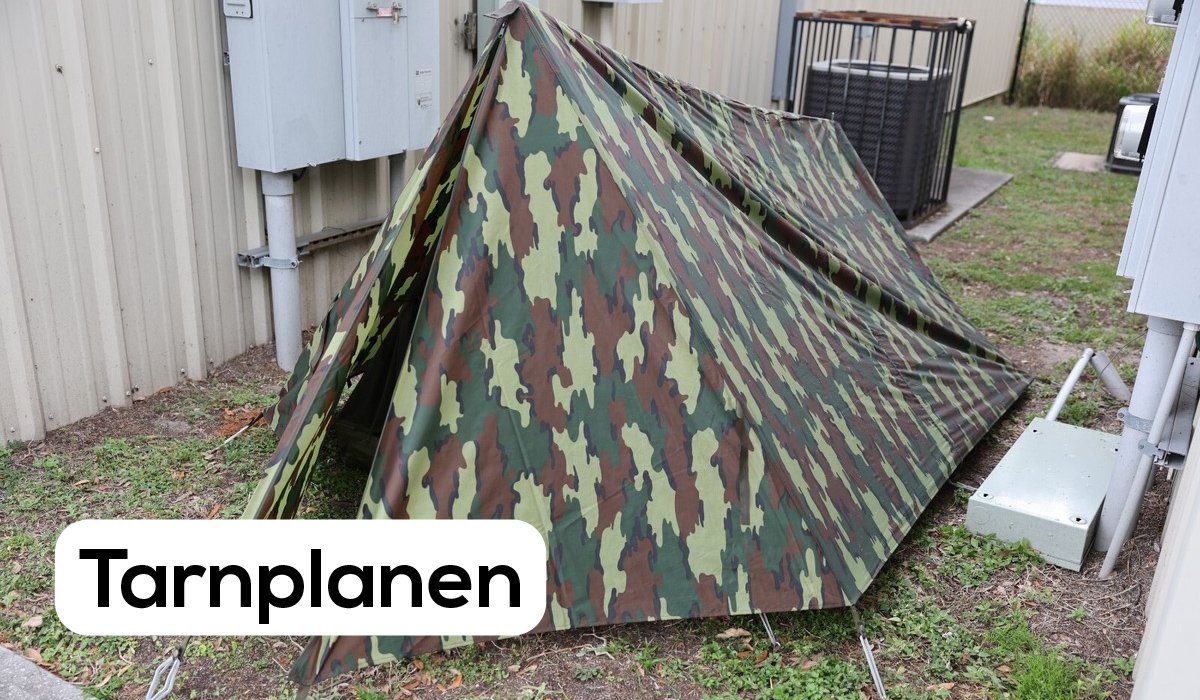
What Is Tarnplanen?
Tarnplanen is a German term that means camouflage tarpaulin or camouflage sheet, and it refers to a strong, weather-resistant cover designed for concealment and protection in outdoor environments. The word comes from “Tarn,” meaning camouflage, and “Planen,” meaning tarpaulins or covers, and together they describe a heavy-duty sheet that blends into natural or tactical surroundings while shielding equipment, shelters, or vehicles from rain, wind, sun, and harsh conditions.
Tarnplanen is widely used in military operations for hiding camps and vehicles, but it is also popular among campers, hunters, survivalists, and outdoor workers who need reliable protection in forests, fields, mountains, or even urban settings.
These camouflage tarps are made from durable, waterproof materials such as PVC-coated polyester, ripstop nylon, or heavy canvas, and they are built to withstand tearing, fading, and long-term outdoor exposure. In Germany, across Europe, and in NATO surplus markets, Tarnplanen has become known as a trusted solution for concealment, weather protection, and multi-purpose outdoor use.
Meaning & Origin of the Word Tarnplanen
The meaning of Tarnplanen is directly connected to its German linguistic roots, where “Tarn” stands for camouflage and concealment, and “Planen” refers to tarps or protective covers, especially those used in logistics and field operations. The term was first commonly used within German military terminology, where camouflage tarpaulins played a critical role in hiding vehicles, equipment, and temporary field camps from enemy observation.
Over time, this practical military equipment gained recognition beyond armed forces and was adopted by NATO forces and other European defense units, which further strengthened its reputation as a reliable concealment solution.
As surplus military gear became available to civilians, outdoor enthusiasts discovered that Tarnplanen offered superior durability and weather resistance compared to standard tarps, and the product gradually expanded into civilian markets. Today, while its origin is firmly tied to military logistics, Tarnplanen is no longer limited to defense use and has evolved into a widely trusted outdoor protection tool.
Types of Tarnplanen Available Today
Modern Tarnplanen comes in several types, each designed to serve specific needs while maintaining camouflage and weather protection capabilities. Military-grade Tarnplanen is the most robust option, often made from heavy-duty materials with reinforced edges and sometimes even infrared-resistant coatings to reduce visibility to thermal equipment, and these versions are commonly found in NATO surplus stores.
Camping and outdoor Tarnplanen is lighter in weight, easier to fold and carry, and designed for hikers or campers who need portability without sacrificing waterproof protection, making it a popular choice for backpackers. Industrial or commercial Tarnplanen is used for cargo covers, agricultural storage, and construction site protection, where camouflage may not always be necessary, but durability and weather resistance remain essential.
DIY and survival Tarnplanen is commonly used by bushcraft enthusiasts and preppers who rely on it for emergency shelters, rain covers, and gear protection in remote areas. Each type maintains the core purpose of Tarnplanen, which is to provide concealment and protection in demanding environments.
Materials Used in Tarnplanen
The materials used in Tarnplanen are carefully selected to balance strength, flexibility, and weather resistance, ensuring long-lasting performance under tough conditions. PVC-coated polyester is one of the most common materials, offering excellent waterproof properties, resistance to mold and mildew, and easy cleaning, which makes it ideal for heavy rain and long-term outdoor exposure.
Ripstop nylon is another popular option, especially for lightweight camping Tarnplanen, as it features a special woven pattern that prevents small tears from spreading and keeps the tarp strong while remaining easy to pack and transport. Canvas or cotton-blend Tarnplanen provides a rugged and breathable alternative, which can be more comfortable in hot climates but may require additional waterproof treatment for full rain protection.
High-quality Tarnplanen also includes reinforced edges and rust-proof grommets or eyelets, which allow secure tying and staking without tearing, ensuring stability in windy conditions and extending the overall lifespan of the tarp.
Key Features of High-Quality Tarnplanen
High-quality Tarnplanen stands out because of its advanced protective features, which go beyond basic tarp functionality. A 100% waterproof coating ensures that rain cannot penetrate the material, keeping both equipment and people dry even during heavy storms. UV resistance is another critical feature, as prolonged sun exposure can weaken fabrics and fade camouflage patterns, but premium Tarnplanen is treated to withstand sunlight without losing strength.
Wind resistance is achieved through reinforced stitching and strong grommets, allowing the tarp to remain secure in rough weather. Mold and mildew protection helps maintain cleanliness and prevents unpleasant odors when used in damp conditions.
Camouflage patterns, including woodland, desert, and digital camo designs, are carefully printed to match specific environments and enhance concealment. The foldable and portable design ensures that Tarnplanen can be packed easily into a backpack or vehicle, and its ability to handle both extreme heat and cold makes it suitable for year-round use.
Primary Uses of Tarnplanen
Tarnplanen is used across multiple fields because of its adaptability and strength, making it one of the most versatile outdoor protection tools available. In military and tactical operations, it is used to conceal vehicles, cover camps, and reduce visibility from drones or aerial surveillance, providing strategic advantages in field missions. Campers and hikers use Tarnplanen as emergency shelters, rain flies over tents, or ground sheets to protect against moisture and rough terrain.
Hunters and wildlife photographers rely on Tarnplanen to create temporary hides that blend seamlessly into natural surroundings, allowing them to observe animals without disturbance. Survivalists and bushcraft practitioners use Tarnplanen to build lean-to shelters, protect gear from rain, and even collect rainwater during emergencies.
In commercial and transport settings, Tarnplanen is used to cover trucks, shield construction materials, and protect agricultural goods from weather damage, proving that its usefulness extends far beyond camouflage alone.
Tarnplanen vs Regular Tarpaulin – What’s the Difference?
The difference between Tarnplanen and a regular tarpaulin lies mainly in durability, camouflage capability, and tactical functionality, as Tarnplanen is specifically designed for concealment and heavy outdoor use while standard tarps are typically intended for general coverage tasks.
Tarnplanen includes camouflage patterns that help it blend into forests, fields, or desert landscapes, whereas regular tarps are often plain blue or green and do not offer concealment benefits. Military-grade Tarnplanen is frequently reinforced for extreme weather durability, while standard tarps may not withstand harsh conditions for long periods.
UV resistance is typically higher in Tarnplanen, allowing it to last longer under sunlight, and its construction often supports tactical use, which regular tarps are not designed for. For those who need concealment combined with long-term outdoor protection, Tarnplanen provides a clear advantage over ordinary tarpaulins.
How to Choose the Right Tarnplanen
Choosing the right Tarnplanen requires understanding your specific needs, environment, and budget to ensure you select a tarp that delivers optimal performance. Size is an important factor, as solo campers may only need a small tarp for shelter, while larger groups or vehicle owners require bigger dimensions for full coverage.
Material selection depends on intended use, with PVC being ideal for heavy weather conditions, nylon suitable for lightweight travel, and canvas offering durability for longer setups. Weather considerations such as snow load capacity, wind exposure, and heat resistance should also influence your decision, especially if you plan to use Tarn planen year-round.
Budget versus professional use is another consideration, as military surplus Tarnplanen may offer exceptional durability at competitive prices, while new retail versions may provide updated materials and warranties. By carefully assessing these factors, you can invest in a Tarn planen that matches your outdoor or tactical requirements.
How to Set Up Tarnplanen as a Shelter (Step-by-Step)
Setting up Tarnplanen as a shelter is simple when done correctly, and proper installation ensures maximum weather protection and stability. First, choose strong anchor points such as trees, poles, or sturdy structures to support the tarp. Next, secure a ridge line between two anchor points, which will act as the main support for the shelter.
Attach the tarp corners through reinforced grommets using paracord or durable rope, making sure the tension is evenly distributed to prevent tearing. Angle the Tarn planen slightly downward to allow rainwater to drain off instead of pooling on top, which can weaken the structure over time.
Finally, stake the lower corners securely into the ground using tent stakes or heavy objects to ensure stability in windy conditions. This method creates a reliable lean-to or A-frame shelter that protects against rain, wind, and sun.
Cleaning & Maintenance Guide
Proper cleaning and maintenance significantly extend the life of Tarnplanen, ensuring it remains effective for many seasons of use. Before storing the tarp, remove dirt, leaves, and debris to prevent stains and mold buildup. Wash Tarn planen gently with mild soap and cold water, avoiding harsh chemicals or bleach that can damage waterproof coatings.
Always allow the tarp to air dry completely before folding and storing it, as moisture trapped inside can cause mildew and fabric deterioration. Store Tarn planen in a cool, dry place away from direct sunlight to preserve its camouflage color and material strength. Regularly inspect reinforced edges and grommets for signs of wear, and repair small tears immediately using specialized tarp repair tape to prevent further damage.
Advantages of Using Tarnplanen
The advantages of using Tarnplanen are clear when considering its durability, versatility, and concealment capabilities, as it offers long-term protection in demanding outdoor conditions. Tarnplanen has a long lifespan due to tear-resistant fabrics and waterproof coatings, making it a cost-effective investment over time. Its multi-purpose design allows it to function as a shelter, ground cover, vehicle cover, or storage protection tool.
Easy transport and compact folding make it suitable for backpacking and travel without adding unnecessary weight. High weather resistance ensures performance during rain, snow, heat, or strong winds, while camouflage patterns provide tactical concealment for hunting or military-style use. Because Tarn planen is reusable for years with proper care, it reduces the need for frequent replacements and supports sustainable outdoor practices.
Common Mistakes to Avoid
Avoiding common mistakes when purchasing or using Tarnplanen ensures better performance and longevity, as choosing the wrong size can lead to inadequate coverage and frustration in the field. Ignoring UV rating may result in faster material degradation under strong sunlight, while overstretching grommets can cause tearing at stress points.
Folding Tarnplanen while wet can lead to mold growth and unpleasant odors, reducing its lifespan. Purchasing low-quality imitations may save money initially, but it often results in weak materials that fail in harsh weather. By selecting high-quality Tarn planen and handling it properly, you can prevent these issues and maximize its benefits.
Where to Buy High-Quality Tarnplanen
High-quality Tarnplanen can be purchased from military surplus stores, outdoor gear retailers, verified online marketplaces, and specialized German tactical supply shops, where product specifications are clearly listed. Before buying, check material details, waterproof ratings, UV protection claims, and reinforcement features to ensure authenticity. Look for certifications or manufacturer warranties that confirm durability standards, especially if you plan to use Tarn planen in extreme weather. Investing in a reputable supplier guarantees better performance, longer lifespan, and genuine camouflage functionality.
Is Tarnplanen Waterproof & UV Resistant?
Yes, high-quality Tarnplanen is waterproof and UV resistant, and it is specifically designed to withstand rain, sun, wind, and harsh outdoor conditions while protecting equipment, shelters, and vehicles from environmental damage. Premium Tarn planen includes durable coatings and reinforced construction to maintain performance even under prolonged exposure.
Is Tarnplanen Legal to Use?
Tarnplanen is generally legal for camping, private outdoor use, and commercial purposes in most countries, but certain regions may have regulations regarding hunting concealment or military-grade equipment. It is advisable to check local laws if using Tarn planen in restricted areas or near sensitive locations, especially when purchasing surplus military versions.
Environmental Impact & Sustainability
Tarnplanen contributes to sustainability because its reusable nature and long lifespan reduce the need for disposable covers, thereby lowering material waste. Canvas versions can offer eco-friendly benefits due to natural fiber composition, while proper disposal and recycling of synthetic versions help minimize environmental impact. By maintaining and reusing Tarn planen over multiple seasons, users support more responsible outdoor practices.
Final Thoughts
Tarnplanen stands out as a durable, reliable, and weather-resistant solution for anyone who needs strong outdoor protection combined with effective concealment, whether in military operations, camping trips, hunting expeditions, or commercial work. Its waterproof design, UV resistance, reinforced construction, and camouflage patterns make it superior to regular tarps in demanding environments.
With proper selection, setup, and maintenance, Tarnplanen can provide years of dependable service while keeping people, equipment, and vehicles safe from the elements. Choosing the right Tarn planen is not just about buying a tarp; it is about investing in long-term outdoor security and performance.
(FAQs) Frequently Asked Questions
1. What does Tarnplanen mean in English?
Tarnplanen is a German word that means camouflage tarpaulin or camouflage tarp in English. It comes from “Tarn,” meaning camouflage, and “Planen,” meaning tarps or covers. Tarnplanen is mainly used for hiding equipment, building shelters, and protecting gear from rain, wind, and sun.
2. Is Tarnplanen better than a regular tarp?
Yes, Tarnplanen is usually stronger and more durable than a regular tarp. It is designed for camouflage and heavy outdoor use. It often has better waterproof coating, UV protection, and reinforced edges, making it suitable for military, camping, hunting, and survival activities.
3. Is Tarnplanen fully waterproof and UV resistant?
High-quality Tarnplanen is fully waterproof and UV resistant. It is made with special coatings that block rain and protect against sun damage. This helps the tarp last longer and keeps equipment dry in harsh weather conditions.
4. What size Tarnplanen should I choose for camping?
For solo camping, a small to medium Tarnplanen (around 2×3 meters) is usually enough for shelter or ground cover. For group camping or covering larger tents, a bigger size is better. Always choose a size that gives extra coverage for rain protection.
5. Can Tarnplanen be reused for many seasons?
Yes, Tarnplanen can be reused for many years if it is cleaned and stored properly. After each use, let it dry completely and keep it in a cool, dry place. With proper care, a good Tarnplanen can last through multiple camping or outdoor seasons.
Read More: Beliktal: The Ultimate Hidden Paradise You Must Discover
For More Visit Deltamagazine