

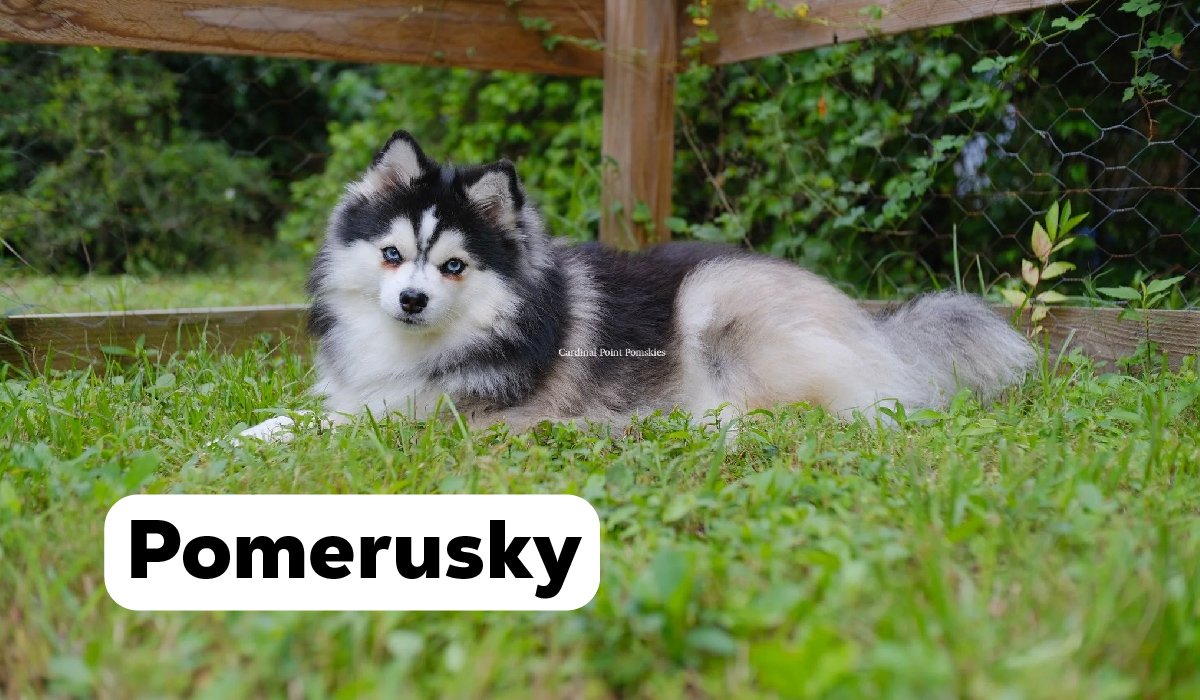
What Is a Pomerusky?
A Pomerusky, also called a Pomsky, is a hybrid dog breed created by crossing a Pomeranian with a Siberian Husky to produce a smaller dog that still has the striking Husky-like appearance. The goal of this mix is to combine the fluffy coat, compact size, and alert personality of the Pomeranian with the intelligence, athletic build, and wolf-like facial features of the Husky.
The Pomerusky became popular in the early 2010s, especially through social media, where people were drawn to its bright blue eyes, thick double coat, and mini-Husky look. Although the Pomerusky is not officially recognized by the American Kennel Club (AKC) because it is a designer hybrid, it is widely bred and loved as a companion dog.
This Pomerusky dog breed is known for being energetic, playful, intelligent, and affectionate, but it also requires regular grooming and daily exercise due to its thick fur and active nature.
Pomerusky vs Pomsky – Is There a Difference?
There is no real difference between a Pomerusky and a Pomsky, as both names refer to the same hybrid dog created by crossing a Pomeranian with a Siberian Husky. The confusion comes from the way the names are formed: “Pomsky” is a shortened and more popular combination of the two parent breed names, while “Pomerusky” is a longer variation that blends “Pomeranian” and “Husky” more directly. Globally, the term “Pomsky” is used more often and has higher search volume, which is why most breeders, clubs, and websites prefer that name.
However, some regions and listings still use “Pomerusky,” so both keywords are important for search visibility and SEO. In simple terms, whether someone searches for Pomerusky or Pomsky, they are looking for the same designer hybrid dog breed.
Origin and History of the Pomerusky
The Pomerusky is a modern designer hybrid that began gaining attention in the early 2010s. Its rise in popularity was strongly influenced by social media, where images of small, fluffy puppies that looked like miniature Siberian Huskies quickly went viral. In 2011, a BuzzFeed article featuring adorable photos of what people believed were Pomeranian–Husky mixes captured massive online interest, even before structured breeding programs were widely established.
As demand grew, professional breeders began intentionally developing the hybrid to create a dog that combined the dramatic, wolf-like appearance of the Husky with the smaller, more manageable size of the Pomeranian. The breed’s development reflects a shift in modern dog ownership trends, where people seek visually striking companions that can adapt to urban living. Because the Pomerusky is a relatively new hybrid, its traits are still being refined, and variations in size, coat, and temperament remain common.
How Are Pomeruskies Bred?
Breeding a Pomerusky requires careful planning due to the large size difference between the parent breeds. A Siberian Husky is much larger than a Pomeranian, which makes natural breeding risky and often unsafe. For this reason, most reputable breeders use artificial insemination to ensure the safety of both dogs and to increase the chances of healthy puppies. In many cases, the Husky is chosen as the mother to reduce complications during pregnancy and delivery.
Responsible breeders conduct genetic health testing to screen for inherited conditions such as hip dysplasia or eye disorders before breeding. Ethical breeding practices are extremely important, as irresponsible breeders may focus only on appearance, such as blue eyes or rare coat colors, rather than health and temperament. Because the breeding process requires veterinary support and specialized care, producing a Pomerusky responsibly is more complex than breeding many traditional dog breeds.
Breed Recognition Status
The Pomerusky is not officially recognized by the American Kennel Club (AKC) because it is a hybrid rather than a purebred dog. The AKC generally registers established pure breeds with long documented histories and standardized traits. However, the Pomerusky is recognized by several hybrid and designer dog organizations that help set breeding standards and promote responsible ownership.
These include the American Pomsky Kennel Club (APKC), the Pomsky Owners Association, and various Designer Breed Registries. These organizations track lineage, provide breeder guidelines, and support community education. While official recognition by major kennel clubs has not yet occurred, the Pomerusky continues to gain popularity worldwide, and structured breeding programs are becoming more consistent over time.
Pomerusky Size and Weight Guide
One of the most important things to understand about the Pomerusky is that its size can vary depending on genetics and breeding generation. Because it is a hybrid, no two litters are exactly the same, and puppies may lean more toward either the Pomeranian or the Husky parent. Breeders typically classify Pomeruskies into size categories to help buyers understand expected growth patterns.
Toy Pomerusky
A Toy Pomerusky usually weighs between 7 and 15 pounds and stands under 10 inches tall at the shoulder. These dogs typically inherit more traits from the Pomeranian parent and have a compact body structure. Toy Pomeruskies are popular among apartment dwellers due to their small size, but they still retain the active personality of the Husky side.
Mini Pomerusky
A Mini Pomerusky generally weighs between 10 and 20 pounds and stands about 10 to 14 inches tall. This size category is one of the most common and often represents a balanced mix of both parent breeds. Mini Pomeruskies maintain a manageable size while still displaying the wolf-like facial features and thick coat that many owners desire.
Standard Pomerusky
A Standard Pomerusky can weigh between 20 and 35 pounds and stand 12 to 18 inches tall. These dogs lean more toward the Husky side in size and body structure but remain smaller than a full Siberian Husky. Standard Pomeruskies often have a stronger, more athletic appearance and may require slightly more exercise.
F1 vs F1B vs F2 Generations
The generation of a Pomerusky plays a major role in size predictability and physical traits.
| Generation | Parent Mix | Trait Predictability | Size Variation |
|---|---|---|---|
| F1 | 50% Pomeranian + 50% Husky | Less predictable | High variation |
| F1B | Backcrossed with one parent (usually Pomeranian) | More predictable | Moderate variation |
| F2 | Two Pomeruskies bred together | Moderately predictable | Balanced traits |
An F1 Pomerusky is the first-generation cross between a pure Pomeranian and a pure Siberian Husky. Because it is an even genetic split, puppies may vary widely in size, coat, and temperament. An F1B Pomerusky is bred by crossing an F1 with one of the parent breeds, usually to stabilize size or coat type.
An F2 Pomerusky is produced by breeding two Pomeruskies together, which may offer more consistent traits but still retains some variation. F1 generations are generally less predictable because the genetics from both purebred parents can express differently in each puppy. Understanding these generations helps potential owners set realistic expectations about size and appearance.
Physical Appearance of a Pomerusky
The Pomerusky is best known for its eye-catching and adorable appearance, which combines the dramatic look of a Siberian Husky with the compact and fluffy build of a Pomeranian. This hybrid often looks like a “mini Husky,” but its features can vary depending on genetics and generation.
Most Pomeruskies have a balanced body structure that appears athletic yet soft, with a thick coat, expressive eyes, and alert posture. Their overall look is one of the main reasons for their popularity, as they often resemble small wolves or foxes while remaining suitable for indoor living. However, while their appearance is charming, it also comes with specific grooming and care needs that owners must understand before choosing this breed.
Coat Type
The Pomerusky typically has a double coat, which means it has two layers of fur. The outer layer is longer and slightly coarse, helping protect the dog from weather conditions, while the inner layer, called the undercoat, is thick, soft, and dense. This thick undercoat helps regulate body temperature, keeping the dog warm in cold climates and insulated during warmer weather.
Because of this heavy coat, the Pomerusky sheds throughout the year and more heavily during seasonal changes, especially in spring and fall when the undercoat “blows out.” Due to the presence of this double coat, the Pomerusky is not hypoallergenic and is not recommended for people with dog allergies. Regular brushing is necessary to manage shedding and prevent matting. The coat should never be fully shaved, as doing so can damage its natural insulation properties.
Coat Colors
One of the most attractive features of the Pomerusky is the wide range of coat colors and patterns it can inherit. Common color combinations include black and white, which often resembles the traditional Husky pattern, and gray and white, another popular Husky-like look. Some Pomeruskies display red and white coats, which give them a warm and fox-like appearance. Solid colors such as cream and sable are also seen, especially in dogs that inherit stronger Pomeranian traits.
In rare cases, some Pomeruskies may have a merle coat pattern, which features a marbled mix of colors; however, this pattern is less common and requires careful breeding due to potential health risks linked to the merle gene. Bi-color coats are very common, often featuring contrasting facial masks and body markings. Because this breed is a hybrid, coat color is not always predictable, and puppies within the same litter can look very different from one another.
Eye Colors
The eyes of a Pomerusky are one of its most striking features and a major reason for its popularity. Many inherit the famous bright blue eyes from the Siberian Husky, which create a dramatic and wolf-like look. Others may have brown eyes, especially if they take more after the Pomeranian side.
Some Pomeruskies develop amber or hazel eye colors, which offer a softer appearance. A particularly unique feature seen in some individuals is heterochromia, where each eye is a different color—commonly one blue and one brown. This rare and eye-catching trait adds to the breed’s distinctive appeal. Eye color may change slightly during puppyhood before settling into its permanent shade as the dog matures.
Facial Features
The Pomerusky’s face is often described as fox-like or wolf-like, depending on which parent breed is more dominant in appearance. Many display the classic Husky facial mask, which includes contrasting markings around the eyes and forehead. Their expression is usually alert and intelligent, giving them a curious and lively look.
The ears are typically upright and triangular, contributing to their attentive appearance. Some Pomeruskies may have a slightly rounder face resembling a Pomeranian, while others have a longer, more pointed snout similar to a Husky. This combination of fluffy fur, upright ears, and expressive eyes creates a balanced and photogenic appearance that many dog lovers find irresistible.
Pomerusky Temperament and Personality
The Pomerusky is known for its lively, playful, and affectionate personality. Because it is a mix of two intelligent and energetic breeds, its temperament reflects qualities from both parents. Pomeruskies are typically social dogs that enjoy interaction and attention from their families.
They are alert, curious, and full of character, often displaying a confident attitude despite their smaller size. While they can be loving companions, they are not passive lap dogs and require engagement and stimulation to stay happy. Understanding their personality traits is important for ensuring they are placed in homes that match their activity level and emotional needs.
Energy Levels
The Pomerusky has moderate to high energy levels, meaning it requires regular physical activity to stay balanced and healthy. On average, this breed needs about 45 to 75 minutes of exercise per day, which can include walks, play sessions, and interactive games.
Even though it is smaller than a full Husky, it often inherits the Husky’s energetic nature and need for movement. Without proper exercise, a Pomerusky may become bored, which can lead to behaviors such as chewing, digging, or excessive barking. Providing daily walks and structured playtime helps maintain both physical health and mental well-being.
Intelligence
The Pomerusky is a smart but sometimes stubborn breed. It inherits intelligence from both the Pomeranian and the Siberian Husky, making it capable of learning commands and tricks quickly. However, the Husky side can introduce an independent streak, meaning the dog may choose when it wants to listen.
This does not mean the breed is difficult to train, but it does require consistency and patience. Positive reinforcement methods, such as treats and praise, work best. Early training helps establish boundaries and encourages good behavior. Mental stimulation through puzzle toys and learning activities is also important to keep this intelligent hybrid engaged.
Social Behavior
In general, Pomeruskies are good with families and can form very strong bonds with their owners. They often enjoy being involved in daily activities and prefer not to be left alone for long periods. Because of their strong attachment to their families, some Pomeruskies may develop separation anxiety if isolated frequently.
With proper socialization from a young age, they can get along well with children and other pets. Exposure to different people, sounds, and environments during puppyhood helps build confidence and prevents fearful or overly protective behavior. Their loyal and affectionate nature makes them devoted companions when raised in a supportive and active home.
Vocalization
The Pomerusky can be quite vocal due to traits inherited from both parent breeds. From the Husky side, some may display the well-known “Husky talking” behavior, which includes howling, whining, and expressive sounds rather than constant barking.
From the Pomeranian side, they may inherit an alert barking tendency, especially when noticing strangers or unusual noises. While this makes them good watchdogs, training is important to manage excessive noise. Teaching quiet commands and providing enough exercise can reduce unnecessary barking. Overall, their vocal nature is part of their personality and can be both entertaining and manageable with proper guidance.
Are Pomeruskies Good Family Dogs?
The Pomerusky can be an excellent family dog when raised and trained properly. This hybrid is usually affectionate, playful, and loyal, which makes it a strong companion for families who are active and involved. Pomeruskies are generally good with children, especially when interactions are supervised and respectful. Because they are energetic and sometimes sensitive, teaching children how to handle and approach the dog gently is important.
With early socialization, a Pomerusky can also live peacefully with other pets, including dogs and even cats. Introducing them slowly and positively during puppyhood increases the chances of harmony. In terms of living space, Pomeruskies can adapt to apartment life as long as they receive enough daily exercise and mental stimulation.
However, they are not low-maintenance dogs and may not be the best choice for completely inexperienced or very busy first-time owners. They do best in homes where owners are active, committed, and able to provide time for training, grooming, and regular interaction.
Pomerusky Exercise Requirements
A Pomerusky has moderate to high energy levels and needs consistent daily exercise to stay healthy and well-behaved. Ideally, this breed should have at least two daily walks, combined with active play sessions. Around 45 to 75 minutes of total physical activity each day is recommended. In addition to physical exercise, mental stimulation is very important because Pomeruskies are intelligent dogs. Puzzle toys, interactive games, and short training sessions help prevent boredom.
Many Pomeruskies enjoy agility training, which challenges both their body and mind. They can also be good hiking companions for moderate distances, especially in cooler weather. Because of their thick double coat, they tolerate cold climates well but may struggle in extreme heat. During hot weather, exercise should be limited to cooler times of the day, and fresh water should always be available. Proper exercise keeps a Pomerusky calm, happy, and less likely to develop unwanted behaviors.
Grooming and Coat Maintenance Guide
The Pomerusky has a thick double coat that requires regular care to keep it healthy and free from mats. Grooming is not optional for this breed; it is a necessary part of ownership. Consistent brushing helps control shedding, prevents tangles, and keeps the coat looking full and clean. Because the coat insulates the dog naturally, it should not be shaved, as this can damage the protective layer and affect temperature regulation.
Brushing Frequency
A Pomerusky should be brushed at least 3 to 5 times per week under normal conditions. During heavy shedding periods, daily brushing is strongly recommended. Using a slicker brush and an undercoat rake helps remove loose hair and reduce buildup. Regular brushing also spreads natural oils through the coat, keeping it healthy and shiny.
Shedding Seasons
Pomeruskies shed throughout the year, but shedding becomes much heavier during seasonal transitions in spring and fall. During these times, the undercoat sheds more intensely, which is often called “blowing coat.” Owners should expect increased hair around the home during these seasons and may need to brush daily to manage loose fur.
Bathing Schedule
Bathing a Pomerusky every 6 to 8 weeks is usually sufficient unless the dog becomes unusually dirty. Using a gentle, dog-safe shampoo helps maintain skin and coat health. Overbathing should be avoided because it can strip natural oils from the coat, leading to dryness or irritation.
Nail, Ear & Dental Care
Nails should be trimmed every 2 to 3 weeks to prevent discomfort or posture problems. Ears should be checked weekly for dirt, wax buildup, or signs of infection. Because Pomeranians are prone to dental issues, dental care is especially important for Pomeruskies. Brushing the dog’s teeth at least three times per week and providing dental chews can help prevent gum disease and tooth decay.
Pomerusky Health Problems
Although the Pomerusky can benefit from hybrid vigor, it may still inherit certain health conditions from its parent breeds. Responsible breeding and regular veterinary care help reduce risks, but owners should be aware of common concerns.
Common Issues
Some Pomeruskies may experience patellar luxation, a condition where the kneecap moves out of place. Hip dysplasia is another joint issue that can affect mobility. Eye disorders, including progressive retinal atrophy (PRA), may also occur. Because of the smaller breed influence, some dogs may develop tracheal collapse or dental disease. Skin allergies and sensitivities can appear, especially in dogs with dense coats. Regular health screenings and early treatment can manage many of these issues effectively.
Lifespan
A healthy Pomerusky typically lives between 12 and 15 years, depending on genetics, diet, exercise, and overall care. With proper attention to health and wellness, many live long and active lives.
Preventive Care
Preventive care is essential for maintaining a Pomerusky’s health. Routine veterinary checkups, vaccinations, parasite prevention, and genetic testing help detect problems early. Maintaining a healthy weight through proper diet and exercise reduces stress on joints and organs, improving overall lifespan.
Pomerusky Diet and Nutrition
A Pomerusky should be fed high-quality food formulated for small-to-medium breed dogs. A protein-rich diet supports muscle development and energy needs. Portion control is very important, as both parent breeds can gain weight easily if overfed. Obesity can lead to joint strain and other health issues. Puppies should be fed 3 to 4 small meals per day to support growth and maintain stable energy levels. Adult Pomeruskies usually do well with two balanced meals per day. Clean water should always be available. Choosing food that supports coat health and joint strength can also benefit this breed.
Pomerusky Training Guide
Training a Pomerusky requires patience, consistency, and positive methods. Because this hybrid is intelligent but sometimes stubborn, early training is very important.
Early Socialization
Early socialization means exposing the puppy to different people, sounds, environments, and experiences. This helps build confidence and reduces fear or aggressive behaviors later in life. A well-socialized Pomerusky is more adaptable and comfortable in new situations.
Obedience Training
Basic obedience commands such as sit, stay, come, and proper leash manners should be taught early. Short, positive sessions with rewards and praise work best. Consistency helps prevent selective listening, which can occur due to the Husky’s independent nature.
Crate Training
Crate training is helpful for housebreaking and providing a safe space for the dog. When used correctly, a crate can make the dog feel secure and assist with routine training.
Managing Stubborn Behavior
Because Pomeruskies can inherit stubborn traits, harsh punishment should be avoided. Positive reinforcement using treats, praise, and patience produces better long-term results. Consistency from all family members is important to avoid confusion.
Pomerusky Price and Ownership Costs
Owning a Pomerusky requires financial planning beyond the initial purchase price.
Puppy Cost
A Pomerusky puppy typically costs between $1,500 and $5,000. The price depends on factors such as eye color, rare coat patterns, generation type, and breeder reputation. Puppies with blue eyes or unique markings may be more expensive.
Annual Cost
Annual ownership costs can range from $1,000 to $2,500 per year. Expenses include food, veterinary care, grooming, pet insurance, training classes, toys, and other supplies. Prospective owners should prepare for long-term financial responsibility.
How to Find a Reputable Pomerusky Breeder
Finding a responsible breeder is essential for a healthy puppy. A reputable breeder should provide health testing certificates such as OFA (Orthopedic Foundation for Animals) and CERF eye clearances. They should allow potential owners to view the parent dogs and breeding environment. A written contract and health guarantee should be included. Avoid breeders who refuse to provide documentation or operate like puppy mills. Responsible breeders focus on health, temperament, and ethical practices.
Pomerusky Pros and Cons
| Pros | Cons |
|---|---|
| Cute and unique appearance | Heavy shedding |
| Intelligent and playful | Can be stubborn |
| Suitable for apartments with exercise | Expensive purchase price |
| Loyal and affectionate | Needs regular grooming |
| Social and engaging | Can be vocal |
Pomerusky vs Other Designer Dogs
Compared to a Pomapoo, the Pomerusky generally sheds more and has higher energy. Compared to a Mini Husky, the Pomerusky is typically smaller and more adaptable to apartment life. When compared to a Shiba Inu mix, the Pomerusky may be more social but similarly independent. Compared to a Labradoodle, which is often known for intelligence and lower shedding, the Pomerusky requires more grooming but offers a unique wolf-like appearance. Each designer breed has different care needs, so lifestyle compatibility is key.
Who Should NOT Get a Pomerusky?
A Pomerusky may not be suitable for people with strong dog allergies due to shedding. Individuals with very low-energy lifestyles or those who work long hours away from home may struggle to meet this breed’s needs. Anyone unwilling to commit to regular grooming, training, and exercise should consider a lower-maintenance breed.
Is a Pomerusky Right for You?
Before choosing a Pomerusky, consider your lifestyle carefully. Do you have time for daily exercise and mental stimulation? Is your climate suitable for a double-coated breed? Are you prepared for grooming and long-term commitment? Can you handle the financial responsibilities? Honest answers to these questions help determine if this breed matches your life.
Final Verdict
The Pomerusky is a beautiful, intelligent, and affectionate hybrid that can bring joy and companionship to the right home. However, it requires dedication, grooming, exercise, and training. This is not a decorative dog but an active and engaged companion. For owners who are prepared to invest time, care, and patience, the Pomerusky can be a loyal and loving member of the family for many years.
FAQs
1. What is a Pomerusky?
A Pomerusky (also called a Pomsky) is a hybrid dog breed created by crossing a Pomeranian with a Siberian Husky. It is designed to have the Husky’s wolf-like appearance in a smaller, more manageable size. Pomeruskies are known for their fluffy double coat, bright eyes, and energetic personality.
2. How big does a Pomerusky get?
A Pomerusky usually weighs between 7 and 35 pounds and stands about 10 to 18 inches tall, depending on genetics and generation. Some are toy-sized and small like a Pomeranian, while others grow larger and resemble a mini Husky.
3. Are Pomeruskies good family dogs?
Yes, Pomeruskies can be good family dogs when properly trained and socialized. They are affectionate, playful, and loyal. They usually do well with children and other pets if introduced early and supervised during interactions.
4. Do Pomeruskies shed a lot?
Yes, Pomeruskies shed regularly because they have a thick double coat. Shedding becomes heavier during spring and fall. Brushing 3–5 times per week (and daily during shedding season) helps control loose fur and keeps the coat healthy.
5. How much exercise does a Pomerusky need?
A Pomerusky needs about 45 to 75 minutes of exercise per day. This can include two daily walks, playtime, and mental activities like puzzle toys or training sessions. Regular exercise keeps them healthy and prevents boredom-related behavior problems.
Read More: Neatlanta: The Powerful New Vision Transforming Atlanta
For More Visit Deltamagazine
